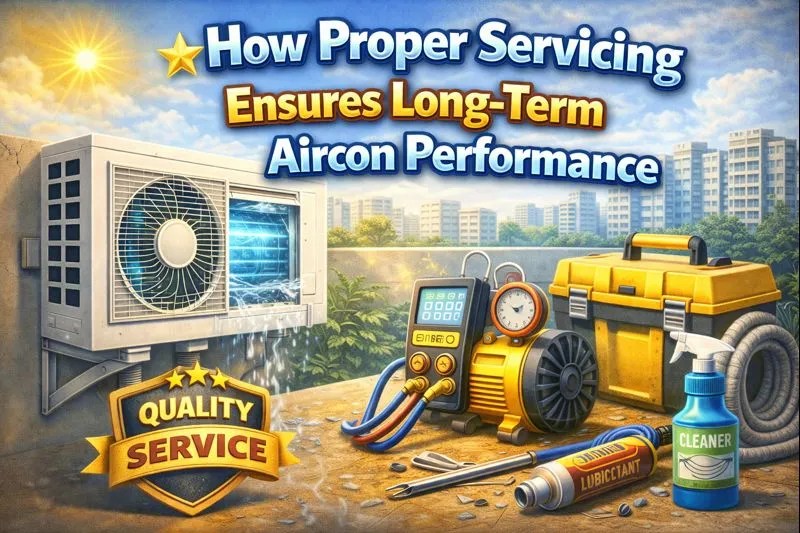
Air conditioning systems support daily comfort in homes and workplaces. Many users expect steady cooling, low noise, and stable energy use over many years. These results depend on regular servicing. Servicing keeps each part clean, aligned, and working as intended. Without servicing, small issues grow into larger faults that reduce aircon performance and shorten system life. This article explains how proper servicing protects long-term aircon performance using clear structure and direct language.
Understanding Servicing and Its Role in Aircon Performance
Servicing refers to planned inspection, cleaning, testing, and adjustment of an air conditioning system. A trained technician checks filters, coils, fans, motors, electrical links, refrigerant levels, and drainage paths. Each task supports stable operation.
Aircon performance depends on airflow, heat transfer, and control accuracy. Dust blocks airflow. Oil and grime reduce heat transfer. Loose wires cause power issues. Low refrigerant weakens cooling. Servicing addresses these risks through routine care. This process keeps the system running at its rated capacity and helps it meet daily cooling needs.
Long-term aircon depends on early fault detection. Servicing identifies wear before breakdown occurs. A technician can replace a worn belt or tighten a loose terminal before it damages other parts. This preventive approach limits downtime and repair costs while protecting system life.
How Regular Cleaning Improves Cooling Output
Filter Cleaning and Airflow Control
Air filters trap dust, pollen, and fibers as air moves through the system. Over time, these particles clog the filter surface and restrict airflow. When airflow drops, cooling becomes weak and room temperatures turn uneven, which increases strain on internal components. Regular maintenance from LS aircon servicing focuses on restoring proper airflow so the system can cool efficiently without added stress.
Servicing includes thorough filter cleaning or timely replacement to remove built-up debris. Clean filters allow air to move freely across the coils, helping the system transfer heat from indoor air to the outdoor unit. This process supports steady aircon performance and prevents the compressor from working harder than necessary.
Clean filters also improve indoor air quality by reducing dust circulation inside the space. Better air quality helps occupants breathe more comfortably and supports healthier indoor conditions, especially in homes with children or older adults.
Coil Cleaning and Heat Transfer
Evaporator and condenser coils move heat during cooling cycles. Dust and grease coat coil surfaces over time. This layer acts as insulation and blocks heat transfer.
Servicing removes buildup from coils using safe cleaning methods. Clean coils absorb and release heat with less effort. This improves cooling speed and keeps energy use steady. Efficient heat transfer protects long-term aircon by reducing strain on key components.
Mechanical Checks That Protect Long-Term Aircon
Fan and Motor Inspection
Fans move air across coils and into rooms. Motors drive these fans at set speeds. Dust, vibration, and age can affect fan balance and motor health.
During servicing, technicians inspect fan blades for cracks and buildup. They check motor bearings and lubrication. Balanced fans and smooth motors reduce noise and power draw. These checks help maintain aircon performance and limit wear on electrical parts.
Belt and Mounting Stability
Some systems use belts to connect motors and fans. Belts stretch and wear with use. Loose belts slip and reduce airflow.
Servicing includes belt tension checks and alignment checks. Secure mounting limits vibration and noise. Stable movement reduces stress on the system frame and internal joints. This care supports long-term aircon operation by preventing structural damage.
Electrical Servicing and System Safety
Wiring and Connection Checks
Electrical links power compressors, fans, and controls. Heat and vibration can loosen terminals. Loose connections cause voltage drops and heat buildup.
Servicing includes inspection of wires, terminals, and contact points. Technicians tighten connections and replace damaged wires. Secure wiring ensures stable power flow and reduces fire risk. Reliable power supports steady aircon performance under daily load.
Control and Sensor Accuracy
Thermostats and sensors guide system operation. They detect room temperature and signal the system to cool or stop. Faulty sensors cause short cycling or long run times.
During servicing, technicians test sensor accuracy and control response. Proper calibration ensures the system runs only when needed. This reduces energy waste and limits wear. Accurate control plays a key role in long-term aircon reliability.
Refrigerant Management and Cooling Strength
Refrigerant Level Checks
Refrigerant absorbs heat inside the building and releases it outside. Low refrigerant weakens cooling and raises compressor temperature. High refrigerant also causes pressure issues.
Servicing includes pressure checks and leak checks. Technicians restore correct refrigerant levels and repair leaks. Balanced refrigerant flow ensures strong cooling and stable operation. This care protects aircon performance and avoids compressor failure.
Leak Detection and Repair
Leaks reduce cooling and harm the environment. Oil stains and pressure drops signal leaks.
Servicing uses tools to locate leaks in coils, joints, and valves. Repairing leaks restores system balance. This step supports long-term aircon by preventing repeated gas loss and system stress.
Drainage Maintenance and Moisture Control
Condensate Drain Cleaning
Air conditioning removes moisture from indoor air. This moisture drains through pipes and trays. Dust and algae can block drains.
Servicing includes drain cleaning and flushing. Clear drains prevent water leaks and mold growth. Dry internal parts reduce corrosion and odor. Moisture control supports clean operation and long-term aircon health.
Tray and Pan Inspection
Drain pans collect water before it exits the system. Cracks and rust cause leaks.
Technicians inspect pans during servicing. They repair or replace damaged pans. Secure drainage prevents water damage to walls and floors. This protection adds to system value and user comfort.
Energy Efficiency and Cost Control Through Servicing
Servicing improves energy use by keeping parts clean and aligned. Clean coils and filters reduce run time. Accurate controls prevent overcooling.
Lower energy use reduces utility bills. It also lowers heat stress on components. Reduced stress extends system life and protects long-term aircon investment. Users benefit from steady comfort without sharp cost increases.
Energy-efficient operation also supports local power systems by reducing peak demand. This effect matters in areas with frequent high temperatures and heavy aircon use.
How Servicing Prevents Major Breakdowns
Small issues often signal larger problems. A faint noise may indicate a loose fan. A slow drain may point to mold growth.
Servicing detects these signs early. Technicians correct faults before they spread. This approach avoids sudden breakdowns during hot periods. Reliable operation builds trust in the system and supports long-term aircon use.
Emergency repairs often cost more than planned servicing. Regular care reduces repair frequency and helps users plan maintenance budgets with confidence.
Impact of Servicing on System Lifespan
Air conditioners contain moving and electrical parts that wear with time. Servicing slows this wear by reducing friction, heat, and strain.
A well-serviced system often lasts several years longer than a neglected one. Extended lifespan delays replacement costs and reduces waste. This benefit matters for both homeowners and businesses.
Long-term aircon performance depends on consistent care. Skipping servicing shortens system life and reduces comfort. Regular attention keeps the system reliable year after year.
Servicing Schedules and Usage Patterns
Residential Usage
Homes often use air conditioning in cycles based on season. Even with moderate use, dust and moisture build up.
Annual or biannual servicing suits most homes. This schedule supports steady aircon performance and prepares the system for peak use periods.
Commercial Usage
Offices and shops use air conditioning daily for long hours. Heavy use increases wear and dirt buildup.
Commercial systems need more frequent servicing. Quarterly checks often suit these environments. Regular care supports long-term aircon operation under constant load.
Choosing Qualified Service Support
Proper servicing requires skill and training. Qualified technicians understand system design and safety standards.
Trained service teams use correct tools and follow clear procedures. Their work protects system parts and user safety. Reliable servicing supports aircon performance and system value over time.
Users should keep service records. Records track system history and help technicians plan future care. This practice supports long-term aircon management.
Conclusion
Proper servicing plays a central role in aircon performance and system life. Cleaning, inspection, and adjustment keep each part working as intended. Servicing improves airflow, heat transfer, control accuracy, and safety. It reduces energy use, limits breakdowns, and extends system lifespan.
Long-term aircon depends on regular care rather than reactive repair. A clear servicing plan protects comfort, cost control, and equipment value. Consistent servicing ensures that air conditioning systems deliver reliable cooling year after year.
 Innovative Minds