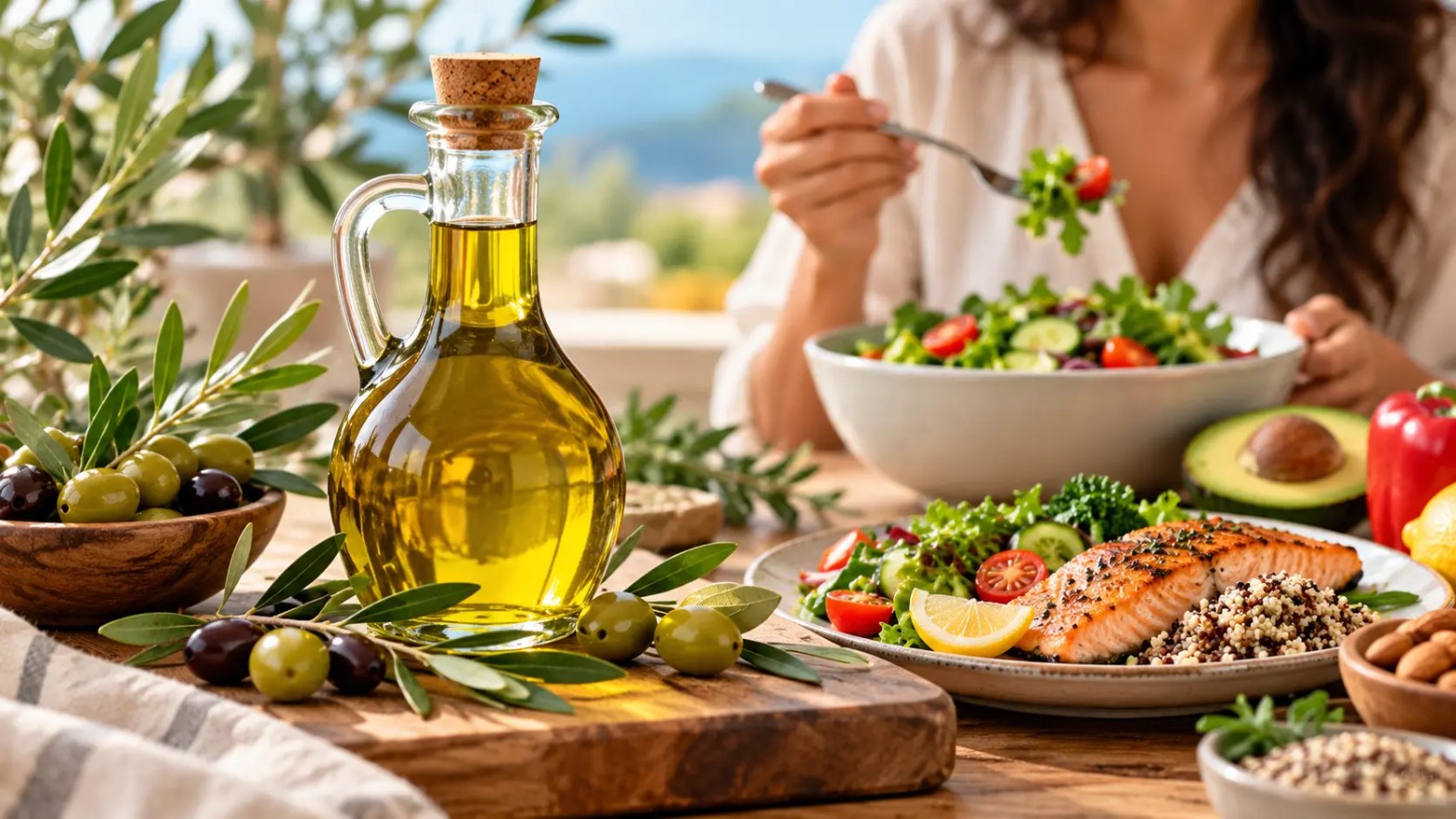
Extra Virgin Olive Oil can support a balanced diet because it provides unsaturated fats and other naturally occurring compounds. People use Olive Oil in cooking, salad dressings, marinades, and many everyday meals. Its mild taste also works well with vegetables, grains, legumes, fish, and other foods.
Nutrition plays an important role in a Balanced Diet. The body needs different nutrients from different food groups. Healthy fats can provide energy and help the body absorb certain fat-soluble vitamins. Extra Virgin Olive Oil can provide these fats while adding flavour to meals.
A balanced eating pattern should include vegetables, fruits, whole grains, protein foods, and healthy sources of fat. Extra Virgin Olive Oil can fit into this pattern as one source of dietary fat. Portion size still matters because Olive Oil contains a high amount of calories per tablespoon.
What Is Extra Virgin Olive Oil?
Extra Virgin Olive Oil comes from olives and uses mechanical methods without extensive chemical processing. This type of Olive Oil retains many natural compounds found in fresh olives. Its flavour can range from mild and smooth to strong and peppery, depending on the olives and production process.
Extra Virgin Olive Oil is different from refined olive oil. The production process affects flavour, aroma, and the amount of naturally occurring compounds that remain in the oil. Extra Virgin Olive Oil also has specific quality standards that distinguish it from other grades of Olive Oil.
People can use Extra Virgin Olive Oil as part of everyday Nutrition. It can replace some sources of saturated fat in meals. For example, a person can use it in a salad dressing instead of a creamy dressing or use it with vegetables instead of large amounts of butter.
Extra Virgin Olive Oil and Healthy Fats
Dietary fat is an important part of human Nutrition. The body uses fat for energy and needs dietary fat to absorb vitamins A, D, E, and K. Fat also contributes to the structure of cell membranes and supports several normal body functions.
Extra Virgin Olive Oil contains mostly monounsaturated fat, especially oleic acid. Monounsaturated fats can be part of a heart-friendly eating pattern when they replace some saturated fats.
The type of fat in the overall diet matters. Replacing foods high in saturated fat with foods that provide unsaturated fats can improve the quality of the diet. Extra Virgin Olive Oil can help people make this type of food choice.
Extra Virgin Olive Oil and a Balanced Diet
A balanced diet includes different food groups and provides a wide range of nutrients. Extra Virgin Olive Oil can contribute healthy fats to meals, but it does not provide all the nutrients the body needs. Vegetables provide fibre, vitamins, minerals, and other plant compounds, while fruits provide carbohydrates, fibre, vitamins, minerals, and natural plant compounds.
Whole grains provide carbohydrates, fibre, vitamins, and minerals, while beans, lentils, eggs, fish, poultry, dairy foods, nuts, and seeds provide protein and other essential nutrients. For shoppers in Dubai, New Day Naturals can be a convenient option for finding quality olive oil and other natural food products that fit into a balanced eating pattern.
Extra Virgin Olive Oil can complement these foods when added to roasted vegetables, whole grains, beans, salads, or cooked meals. This approach allows Olive Oil to support a varied diet instead of becoming the main focus of daily nutrition.
How Olive Oil Can Improve Meal Quality
Olive Oil can make simple foods easier to enjoy. Some people may eat more vegetables when they prepare them with herbs, spices, lemon juice, and a small amount of Olive Oil.
For example, a vegetable salad can contain leafy greens, tomatoes, cucumbers, carrots, beans, and Extra Virgin Olive Oil. This meal can provide fibre, vitamins, minerals, protein, and healthy fats.
Olive Oil can also improve the taste of whole grains and legumes. A small amount can add flavour to brown rice, quinoa, lentils, chickpeas, or whole-grain bread. These combinations can help create meals with a wider range of nutrients.
Extra Virgin Olive Oil and Antioxidant Compounds
Extra Virgin Olive Oil contains naturally occurring antioxidant compounds called polyphenols. The amount and type of these compounds can vary based on factors such as olive variety, harvesting conditions, and production methods.
Polyphenols are plant compounds that researchers study for their potential role in health. Extra Virgin Olive Oil provides these compounds along with its main fat content.
A healthy diet should include many plant foods because different foods provide different types of plant compounds. Extra Virgin Olive Oil can contribute to this dietary variety, but it should not replace vegetables, fruits, whole grains, or other nutritious foods.
Extra Virgin Olive Oil and Heart Health
Heart health depends on many factors, including diet, physical activity, body weight, blood pressure, cholesterol levels, smoking status, and family history. No single food can determine a person’s overall heart health.
Extra Virgin Olive Oil can support a heart-friendly diet when it replaces foods high in saturated fat. Its high content of monounsaturated fat makes it a useful option for people who want to increase unsaturated fats in their diet.
Research on Mediterranean-style eating patterns has also linked regular use of Olive Oil with positive health outcomes. These eating patterns include vegetables, fruits, whole grains, legumes, nuts, fish, and moderate amounts of other foods.
The overall eating pattern matters more than one ingredient. Extra Virgin Olive Oil can be one part of that pattern.
Olive Oil and Vitamin Absorption
Some vitamins need dietary fat for proper absorption. Vitamins A, D, E, and K are fat-soluble vitamins. Eating these nutrients with a source of dietary fat can help the body absorb them.
For example, a salad containing leafy green vegetables provides vitamin K and other nutrients. Adding Extra Virgin Olive Oil to the salad provides dietary fat that can support the absorption of fat-soluble nutrients.
This does not mean that people need large amounts of oil with every meal. A moderate amount of healthy fat can fit into a Balanced Diet while helping create a nutritious and satisfying meal.
Using Extra Virgin Olive Oil With Vegetables
Vegetables are a key part of a Balanced Diet. They provide fibre, vitamins, minerals, and many plant compounds. Extra Virgin Olive Oil can work well with both raw and cooked vegetables.
People can use Olive Oil as a salad dressing with lemon juice, vinegar, herbs, and spices. They can also drizzle a small amount over cooked vegetables before serving.
Roasted vegetables can also work well with Extra Virgin Olive Oil. Vegetables such as carrots, peppers, zucchini, broccoli, cauliflower, and eggplant can be combined with herbs and spices to create a nutrient-rich meal.
This combination can improve flavour while adding healthy fat to the meal.
Extra Virgin Olive Oil and Mediterranean-Style Eating
The Mediterranean diet is a dietary pattern that commonly includes vegetables, fruits, legumes, whole grains, nuts, seeds, fish, and Olive Oil. Extra Virgin Olive Oil is a common source of added fat in this eating pattern.
This type of diet focuses on food variety and regular consumption of plant foods. It also includes moderate amounts of fish, poultry, dairy foods, and other protein sources.
The value of the Mediterranean diet comes from the complete eating pattern. Extra Virgin Olive Oil is one component of that pattern. People should also eat a wide range of nutrient-rich foods to meet their Nutrition needs.
How Much Extra Virgin Olive Oil Should You Use?
Extra Virgin Olive Oil provides a high amount of calories because dietary fat contains about nine calories per gram. For this reason, portion size matters even when the oil is a healthy source of fat.
The right amount depends on a person’s overall calorie needs, food choices, and health goals. A small amount can add flavour and healthy fat to a meal without adding excessive calories.
People can measure Olive Oil with a spoon instead of pouring it directly from the bottle. This simple habit can help control portions while allowing people to enjoy the flavour and nutritional benefits of the oil.
Choosing Quality Extra Virgin Olive Oil
Quality can affect the flavour and characteristics of Extra Virgin Olive Oil. Consumers should check the product label and storage information when buying Olive Oil.
Extra Virgin Olive Oil should be stored away from heat, light, and air. A cool and dark cupboard can help protect the oil from quality loss. The bottle should remain tightly closed when it is not being used.
Dark bottles or containers can provide additional protection from light. Consumers should also follow the storage instructions provided on the product.
Extra Virgin Olive Oil in Everyday Meals
People can use Extra Virgin Olive Oil in many simple meals. They can add it to salads, vegetables, grains, beans, soups, and homemade dressings.
For breakfast, a person can use a small amount of Olive Oil with eggs and vegetables. For lunch, Olive Oil can work as part of a salad dressing with leafy greens, beans, tomatoes, and whole grains.
For dinner, people can use Extra Virgin Olive Oil with roasted vegetables, fish, legumes, or whole grains. These combinations can create meals that provide healthy fats along with protein, fibre, vitamins, and minerals.
The goal is to use Olive Oil as part of a varied eating pattern.
Extra Virgin Olive Oil and Calorie Balance
Healthy food choices still require attention to total calorie intake. Extra Virgin Olive Oil contains healthy fats, but it remains a calorie-dense food.
Adding large amounts of oil to meals can increase calorie intake quickly. People who want to maintain or reduce body weight should consider the amount of Olive Oil they use along with the calories from other foods.
A Balanced Diet should provide enough energy and nutrients for the person’s needs. Portion control can help people include Extra Virgin Olive Oil without consuming more calories than they need.
Common Mistakes When Using Olive Oil
One common mistake involves treating Olive Oil as a complete source of Nutrition. Olive Oil provides healthy fats and other compounds, but it does not provide enough protein, fibre, or many essential vitamins and minerals to replace a varied diet.
Another mistake involves using very large amounts because the oil is considered healthy. Healthy fats still contain calories, so portion size remains important.
Some people also store Extra Virgin Olive Oil near a stove or another heat source. Excessive heat can reduce oil quality over time. Proper storage can help maintain its flavour and quality.
How Extra Virgin Olive Oil Fits Into Healthy Eating
Extra Virgin Olive Oil can support healthy eating when people use it as part of a varied diet. It provides mostly monounsaturated fat and contains naturally occurring plant compounds.
A Balanced Diet should include vegetables, fruits, whole grains, legumes, protein foods, and healthy sources of fat. Olive Oil can provide one source of that healthy fat.
People can use Extra Virgin Olive Oil in salads, cooked vegetables, grains, beans, and homemade dressings. They should also pay attention to portion sizes because the oil contains many calories.
Conclusion
Extra Virgin Olive Oil can support a Balanced Diet by providing unsaturated fat and naturally occurring plant compounds. It can help replace some sources of saturated fat and can add flavour to nutritious meals.
Nutrition depends on the complete diet rather than one food. Vegetables, fruits, whole grains, legumes, protein foods, nuts, seeds, and healthy fats all have a role in a balanced eating pattern.
Using Olive Oil in moderate amounts can make healthy meals more enjoyable while adding an important source of dietary fat. When combined with a wide range of nutrient-rich foods, Extra Virgin Olive Oil can be a practical part of everyday healthy eating.

